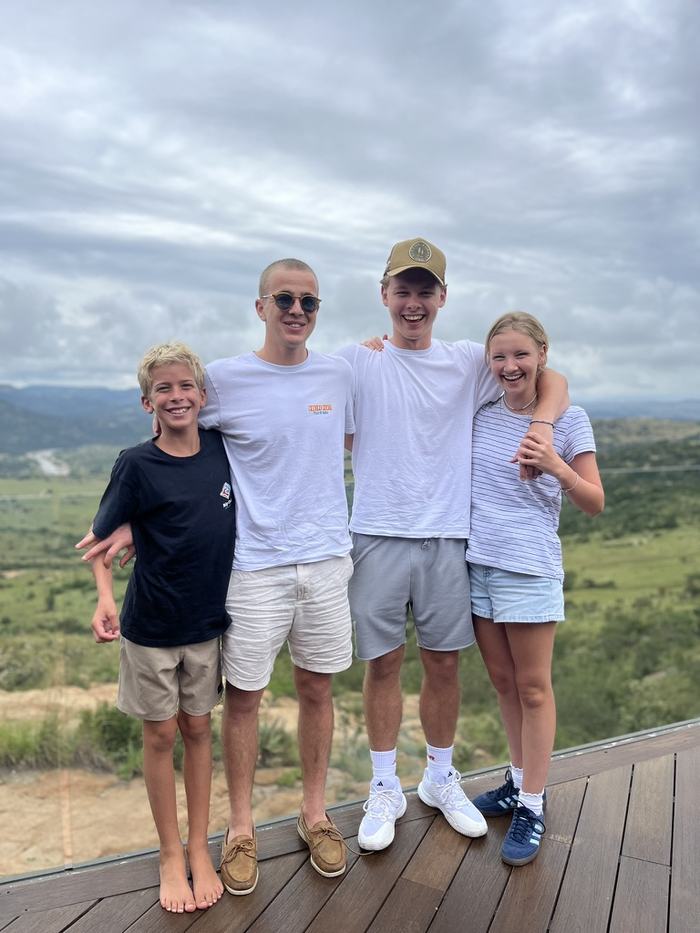
Welcome to your My African Routes travel guide!
Administrative Formalities
Your passport must be valid for at least 30 days after your return and have at least two blank pages for entry and exit stamps. Make copies of your passport and keep a digital version in a secure location.
As citizens of the European Union, the United States, Canada and Australia, you do not need a visa for stays of less than 90 days.
Since 1 July 2026, all travellers, including foreign visitors, must complete an online traveller declaration (SATMS) before arriving in South Africa.
Online declaration : you can complete it here: https://www.sars.gov.za/travellerdeclaration/
Travelling alone with a child — copy of the birth certificate, passport, letter of authorisation from the other parent and a copy of the other parent’s passport.
Travelling as a couple — copy of the birth certificate and passport.
Official government information : visit www.dha.gov.za for more details.
Health
The South African government’s map shows malaria-risk areas in South Africa and neighbouring countries. Low-risk areas only require mosquito repellent.
Zimbabwe : Victoria Falls is a malaria-risk area, but cases have decreased thanks to preventive measures. It is advised to use mosquito repellent after 3pm and to cover arms, legs and ankles in the evening to avoid bites.
No vaccinations are mandatory but some are recommended. Consult your doctor before departure for a personalised assessment.
Check before departure that you have adequate insurance (medical cover, assistance and repatriation).
Medical care is readily accessible. In major cities, you will find excellent infrastructure in the form of private clinics, hospitals and general practitioners; however, rural areas are less well served.
Most hospitals or clinics expect advance payment for walk-in consultations, or full details of your medical cover before treating you. This is standard practice in private facilities throughout the country. Public hospitals have emergency services, but it is best to avoid using these facilities.
Bring basic medications. Pharmacies such as Clicks and Dischem are easily accessible.
Official travel information : visit your government’s official travel advisory website for recommendations before departure.
Food
South Africa has strict food hygiene standards, which ensures a generally safe environment for consuming food. For street food, it is important to take basic precautions.
Drink bottled water only, unless lodges specify that the water is safe to drink or provide filtered water.
Don’t leave without trying Biltong/Droëwors (dried meat), Bobotie (spiced minced meat), Boerewors (beef and lamb sausage), Malva pudding (a delicious dessert) and Koeksister (a sweet pastry).
Money
The local currency is the Rand (ZAR), currently at approximately 18 to 20 Rand to €1 (for a live conversion, visit XE.com). We recommend withdrawing cash on arrival, preferably from a Nedbank, Standard Bank, Capitec, FNB or Barclays ATM, and carrying between R4,000 and R6,000. In Zimbabwe, accepted currencies are USD, ZAR and Euro. ATMs in town are not always working — always keep some cash on you.
Visa and Mastercard are widely accepted in restaurants, hotels and shops.
In South Africa, tipping is a common courtesy though not always mandatory. In shopping centres or in town, car guards help drivers find a parking spot and carry their shopping — R5 to R10 is appropriate. Petrol station attendants, who fill your tank, clean the windscreen and check water, oil and tyres, appreciate the same amount. For restaurant waiters, who rely on tips for their income, the standard is 10% of the bill. Lodge staff (porters, waiters, bartenders) generally receive R200 per day into a shared pool. Safari guides receive R300 per day and trackers R100 per day if present.
These guidelines are indicative and can of course be adjusted to your preferences.
Climate & Timing
Seasons are reversed compared to Europe. In winter, temperatures range from 8°C at night to 20°C during the day. In summer, expect 15°C at night and 28°C during the day, reaching 35°C in the north.
Days are warm, sometimes very hot, with milder evenings. Opt for light, comfortable clothing in breathable fabrics like cotton or linen : short or lightweight long-sleeved shirts, light trousers or shorts, a swimsuit and sarong. Pack a light jacket or windbreaker for evenings and early morning safaris, along with comfortable closed shoes, sandals, and neutral colours (khaki, beige, olive) for safaris. Don’t forget a hat or cap, sunglasses, sunscreen, a water bottle and a small daypack for excursions.
Days are generally mild, but mornings and evenings can be very cool, especially on safari. Layering is recommended : long-sleeved shirts, long trousers, a warm sweater or fleece, a windproof or light waterproof jacket, and a light down jacket for early morning safaris. A beanie and scarf are useful for cold mornings. Opt for neutral colours (khaki, beige, olive) for safaris and comfortable closed shoes.
On early morning and late afternoon safaris, temperatures can be cold in open vehicles. Lodges generally provide blankets, but a warm fleece and a good windbreaker are highly recommended.
Remember to pack mosquito repellent (depending on region and season), binoculars for wildlife viewing, a foldable bag for the beach or excursions, a camera and a plug adaptor (Type M for South Africa). Practically speaking, bring your personal medications, a small first-aid kit, copies of important documents (passport, insurance) and a bank card along with some cash to withdraw on arrival.
In the Southern Hemisphere winter, there is no time difference with France. In summer, there is a 1-hour difference.
Phone & Internet
Consider activating an international roaming plan if available and adjust your data overage settings. Install your operator’s mobile app before departure, and keep in mind that all use of your connected device — calls, social media, navigation, GPS, emails and apps — will consume your personal data allowance.
These plans are available at Vodacom stores in airports and participating retailers. They include data, minutes and SMS valid on all networks for 30 days, and are activated upon purchase and SIM registration (RICA). Learn more : Vodacom Travel SIM.
These eSIM plans are available through the Airalo app. They include data valid on all South African networks and are activated upon installation on a compatible phone, with no need to visit a store. Learn more : Airalo South Africa eSIM.
Most hotels and restaurants in major cities offer free Wi-Fi. When connected to Wi-Fi, you do not consume your personal data allowance or SIM card data.
Getting Around
Driving is on the left. Check the validity of your licence before departure — neither an international driving permit nor a translated licence is required.
Motorways are in good condition and well maintained. Secondary roads may have potholes — stay alert. Don’t be surprised : a lot happens on the main roads — pedestrians, cyclists, goats, cows, golf ball sellers and avocado vendors. That’s daily life!
Your rental car should have an e-toll tag, but always keep some cash in case of malfunction — toll booths do not accept international credit cards. During power cuts (load-shedding), traffic lights stop working and become four-way stops : priority goes to whoever arrives first.
On two-lane roads, drivers often move into the yellow emergency lane to let other cars pass. Do so with care, as this lane is frequently used by pedestrians and cyclists. If someone pulls over to let you pass, thank them with your hazard lights. Night driving and driving in rural areas should be avoided due to pedestrians who are hard to spot and animals that may cross the road. The legal blood alcohol limit is 0.05%. Parking is freely available at most hotels, lodges, shopping centres and on the street.
Safety & Practical Tips
Useful Contacts
250, Melk Street – New Muckleneuk, 0181 Pretoria. Tel : +27 12 425 1600. Email : france@ambafrance-rsa.org. Website : za.ambafrance.org.
Rosebank Corner Building, 3rd Floor – 191 Jan Smuts Avenue – 2193 Parktown North, Randburg, Johannesburg. Tel : +27 11 209 0178 (local) or +33 5 24 09 23 50 (international). Emergency : +27 82 467 2588. Email : admin-francais.johannesburg-fslt@diplomatie.gouv.fr. Website : johannesburg.consulfrance.org.
78, Queen Victoria Street Gardens, 8001 Cape Town. Tel : +27 (0)21 490 0940. Emergency : +27 834 604 360. Email : consulat.le-cap-fslt@diplomatie.gouv.fr. Website : lecap.consulfrance.org.
To find French-speaking doctors in Johannesburg, visit johannesburg.consulfrance.org. For Cape Town, visit lecap.consulfrance.org.
Emergency Contacts
📞 112 — All emergencies (rescue, ambulance, fire, accident…)
📞 10111 — Police emergency
📞 10177 — Ambulance