December in the Greater Kruger is not the version most people picture. The bush is green — properly green, not the dust-and-dry-grass landscape of the dry season — and the light has a quality that photographers come back for year after year. It is also, in many ways, the most alive time to be here. Everything is breeding, everything is moving, and the shorter days mean evening game drives run deep into genuinely dark nights.
We spent the last days of the year in a private concession bordering the national park, and this is the account of what a few days in the Greater Kruger at the year’s end actually looks like.
Arriving
The drive into the Lowveld from Johannesburg takes around five hours — long enough that you feel you have genuinely left somewhere and arrived somewhere else. The gateway towns to the Kruger have their own character: part service town, part conservation outpost, with murals and markets that signal you are now operating at a different pace.
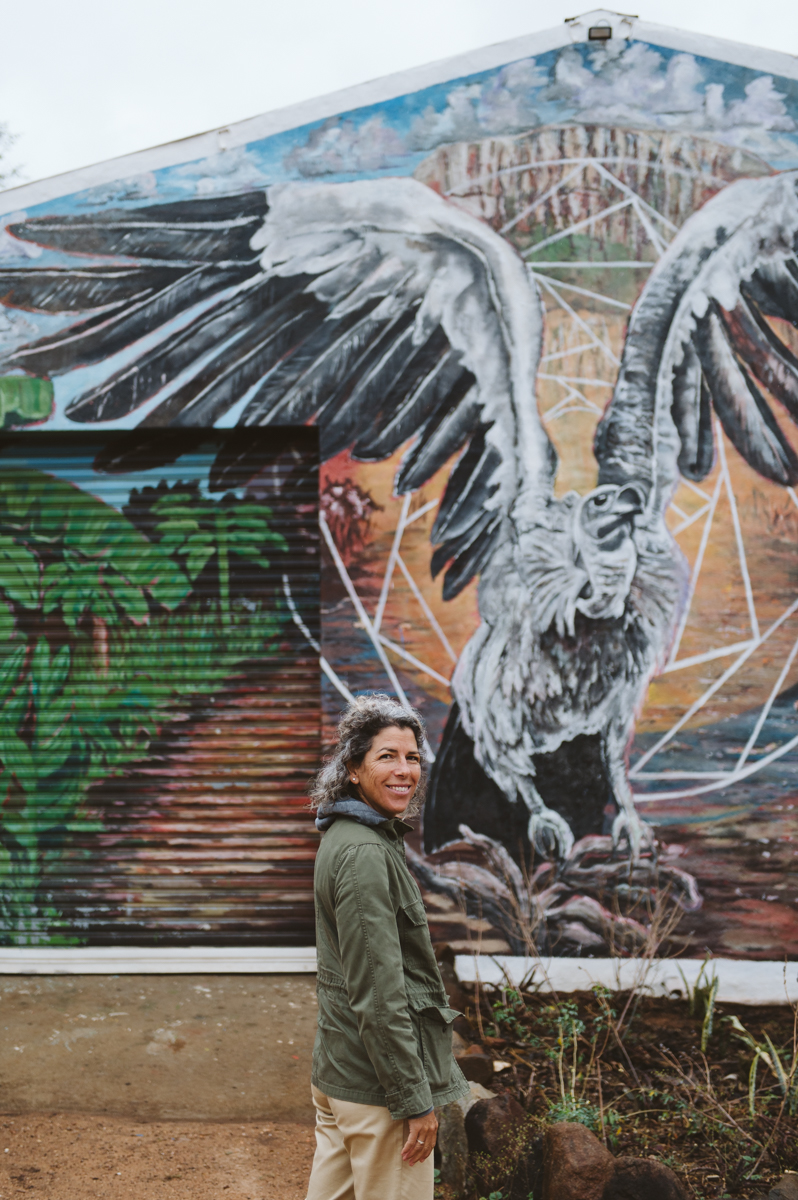
Once through the gates and onto the dirt roads of the concession, your guide becomes your orientation point. The first stop is often somewhere like a dry riverbed — not because there is anything obvious to see, but because that is exactly the point. A good guide teaches you to read absence as much as presence: what the tracks say, what the birds are doing, what the silence means.
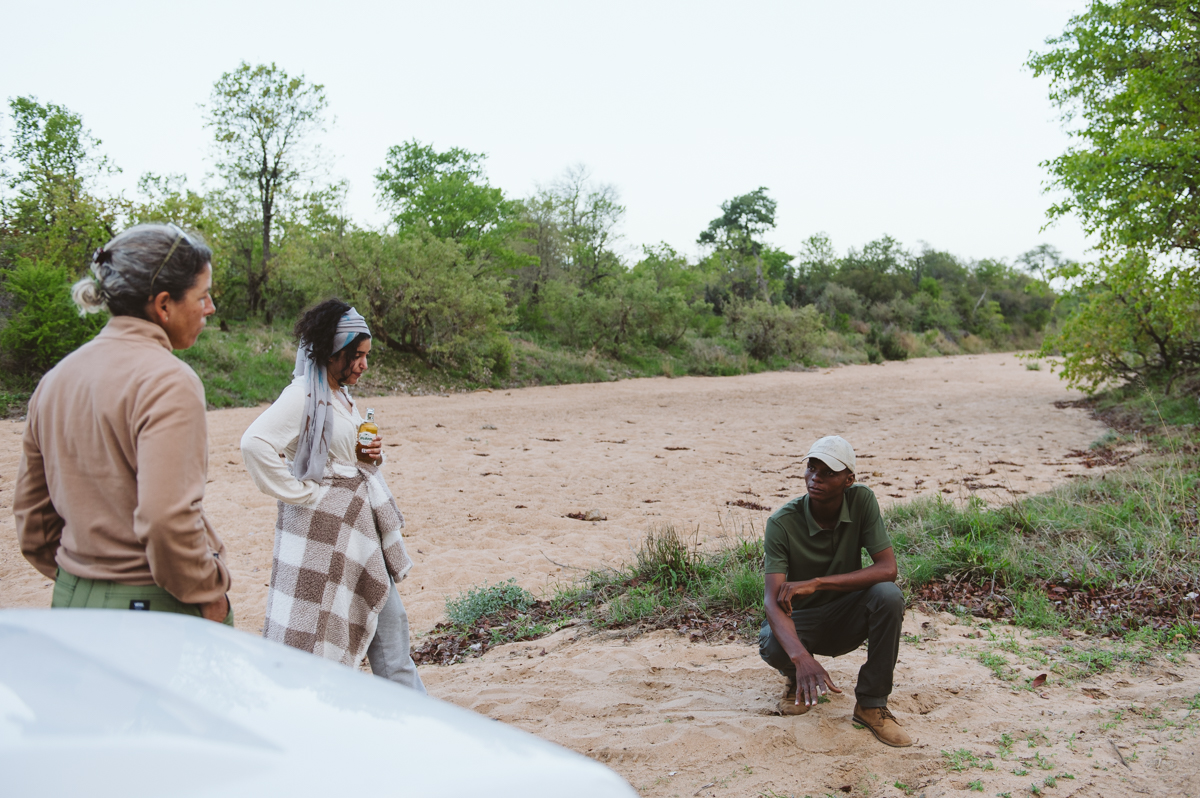
On the game drives
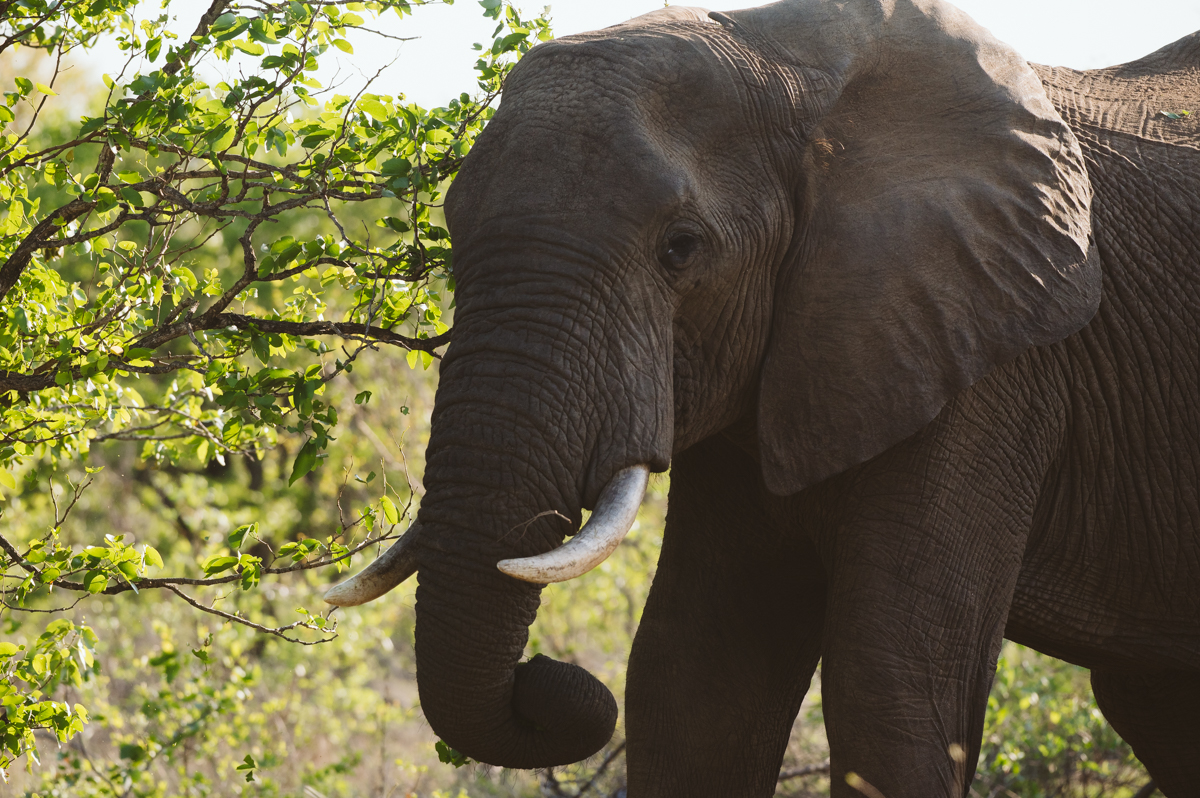
The Greater Kruger in December rewards patience. The vegetation is thick enough that animals can disappear entirely within a few metres of the road, which means the sightings you do get feel genuinely earned. Elephants are the most consistent presence — bulls moving alone, family herds crossing the road unhurried, cows with young calves staying close to water.
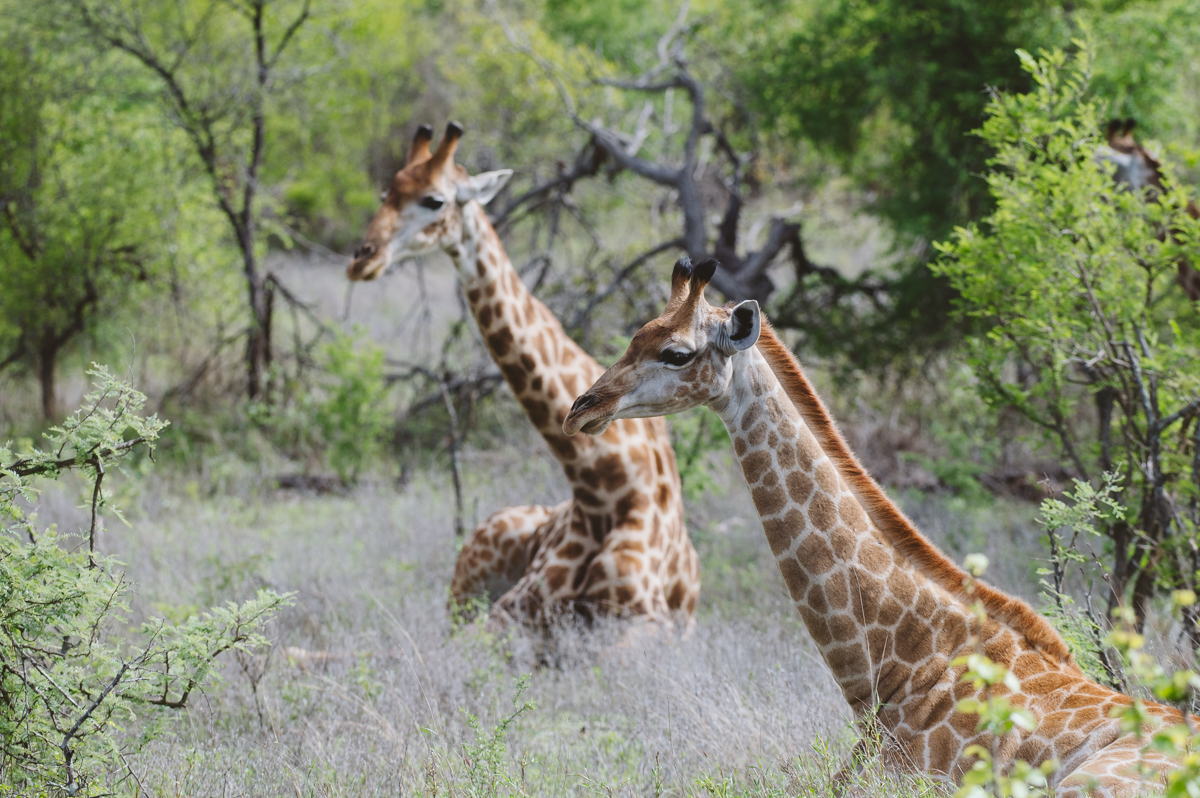
The giraffes we found on the second morning were resting — something you rarely see on a busy reserve where game vehicles move through constantly. In the private concession, the animals are calmer, the encounters quieter, and the time spent with them is yours to decide. We stayed with those two giraffes for nearly twenty minutes without another vehicle arriving.
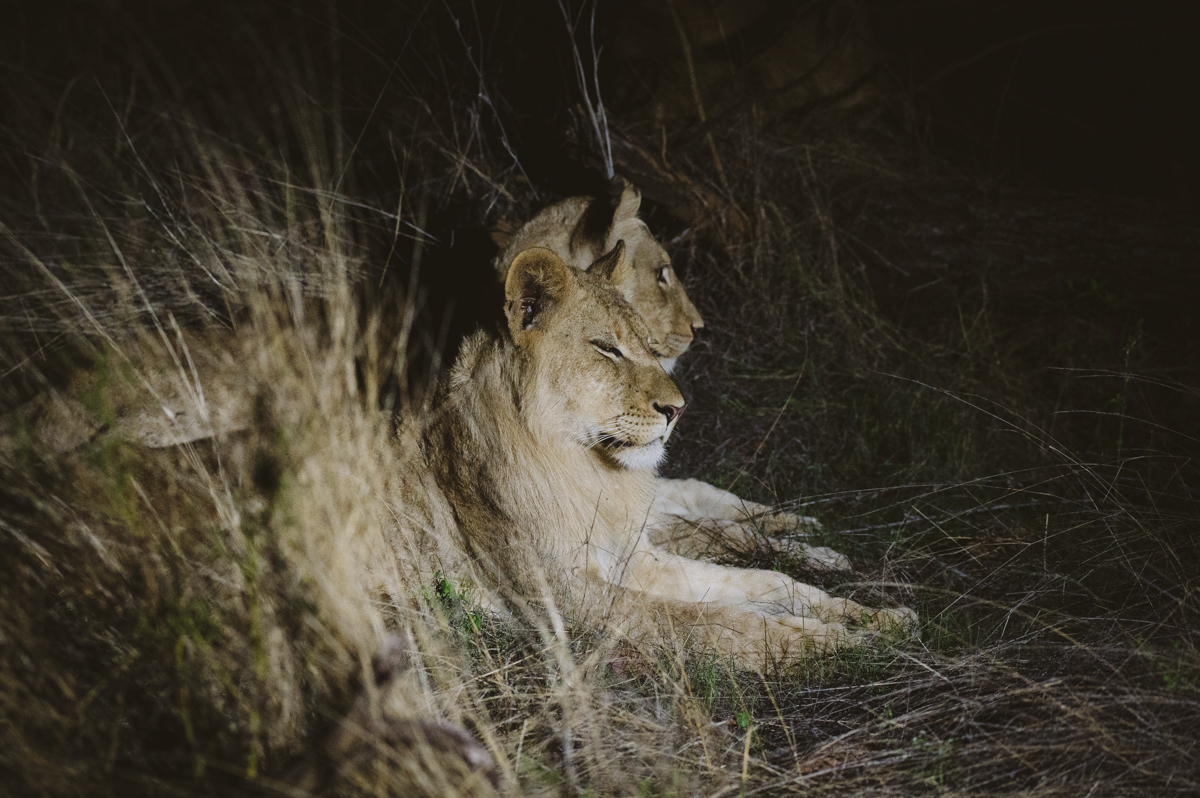
The night drives are what set the private concession experience apart from anything available inside the national park. With a spotlight, a skilled tracker, and no other vehicles on the roads, you access a Kruger that most visitors never see. Lions at close range, spotted after dark by their eye-shine and the soft sound of cubs calling — one of those sightings that stays with you long after the trip is over.
Where you stay
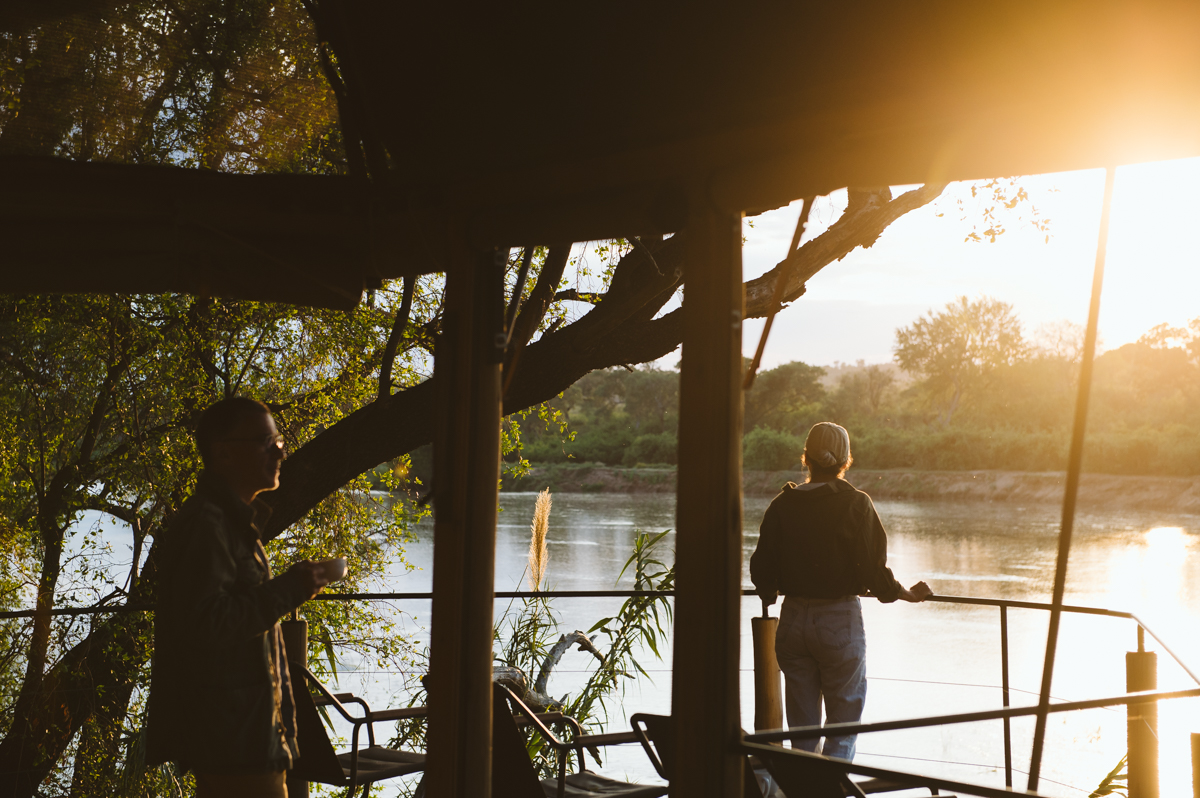
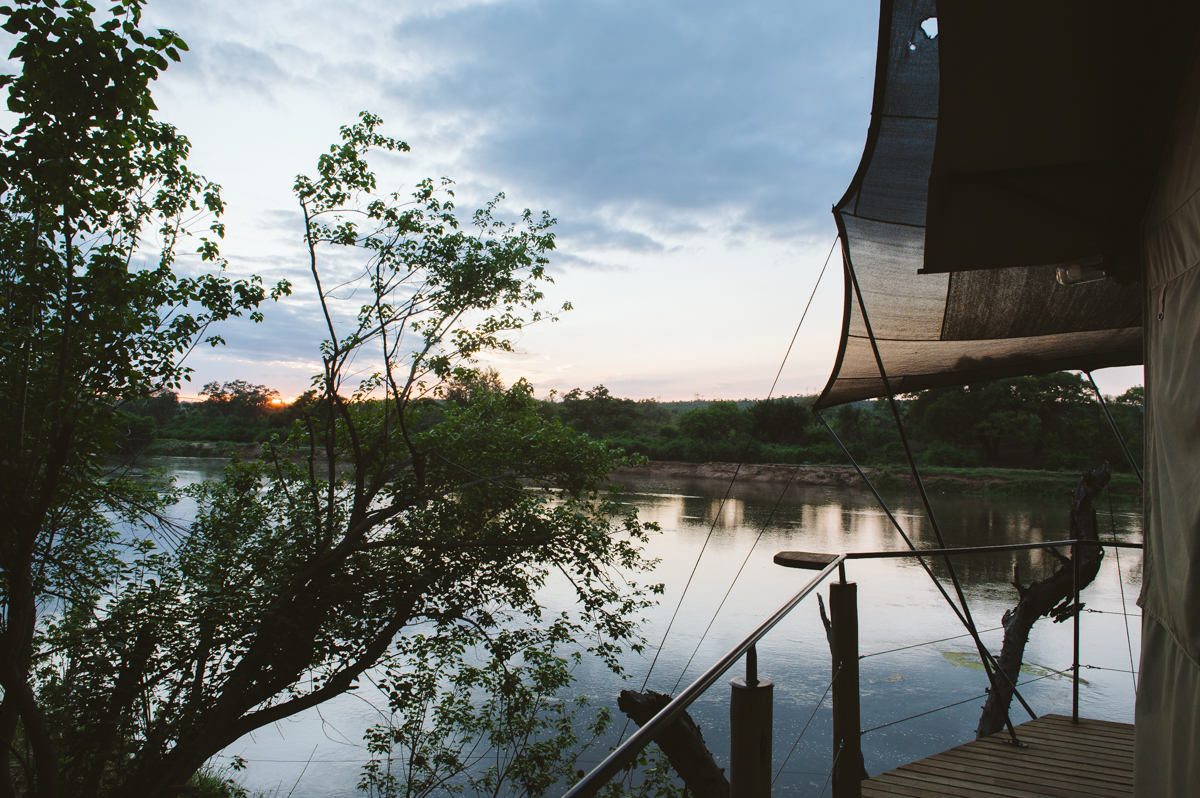
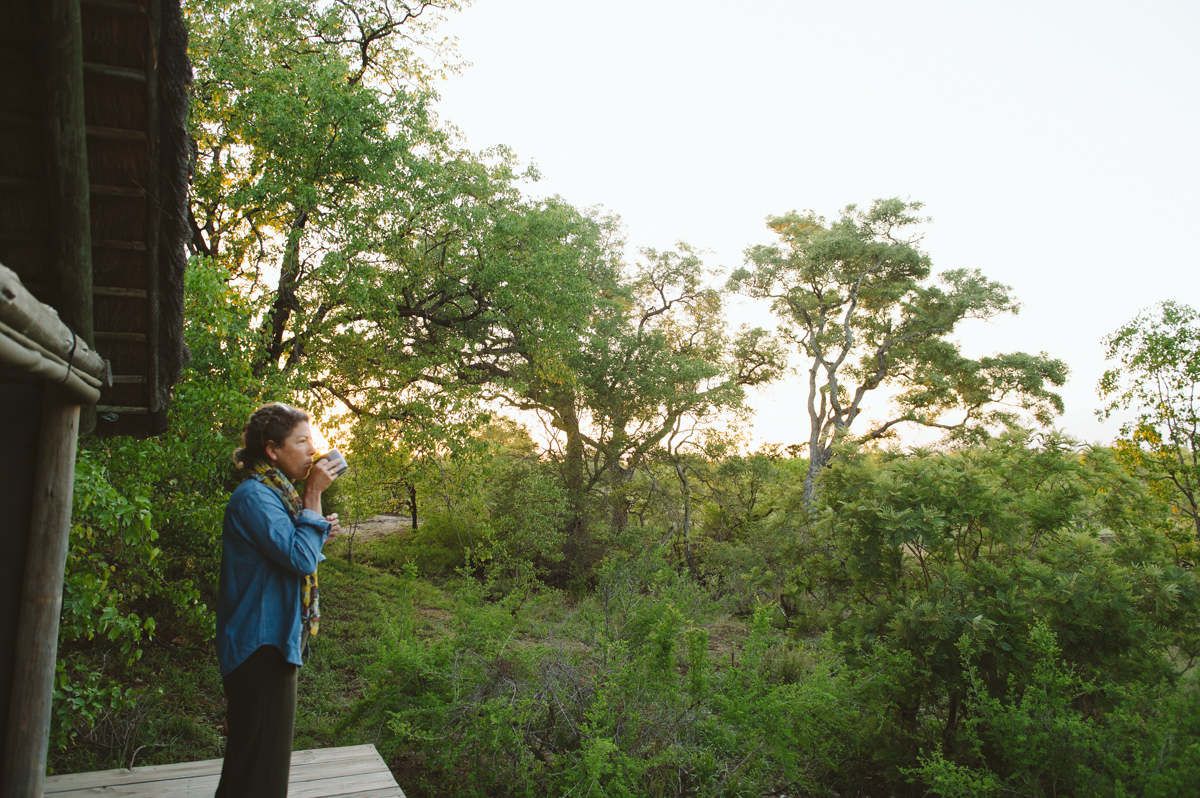
The lodge sat directly on the river. That positioning is not incidental — a river in the Lowveld is a permanent water source, which means it is a permanent wildlife corridor. From the deck, in a single afternoon, we watched a breeding herd of elephants cross downstream, a pair of hippos surface and sink, and a fish eagle take something from the shallows that it carried back across the water in a wide, slow arc.
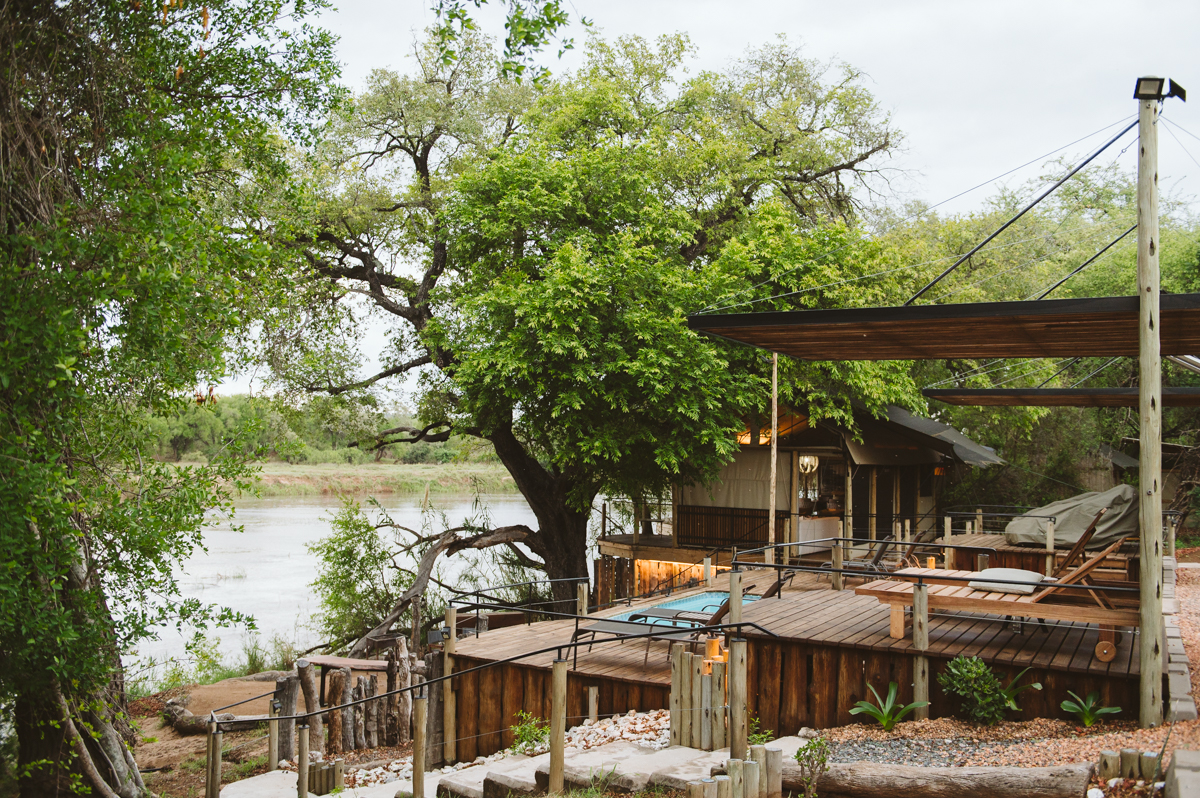
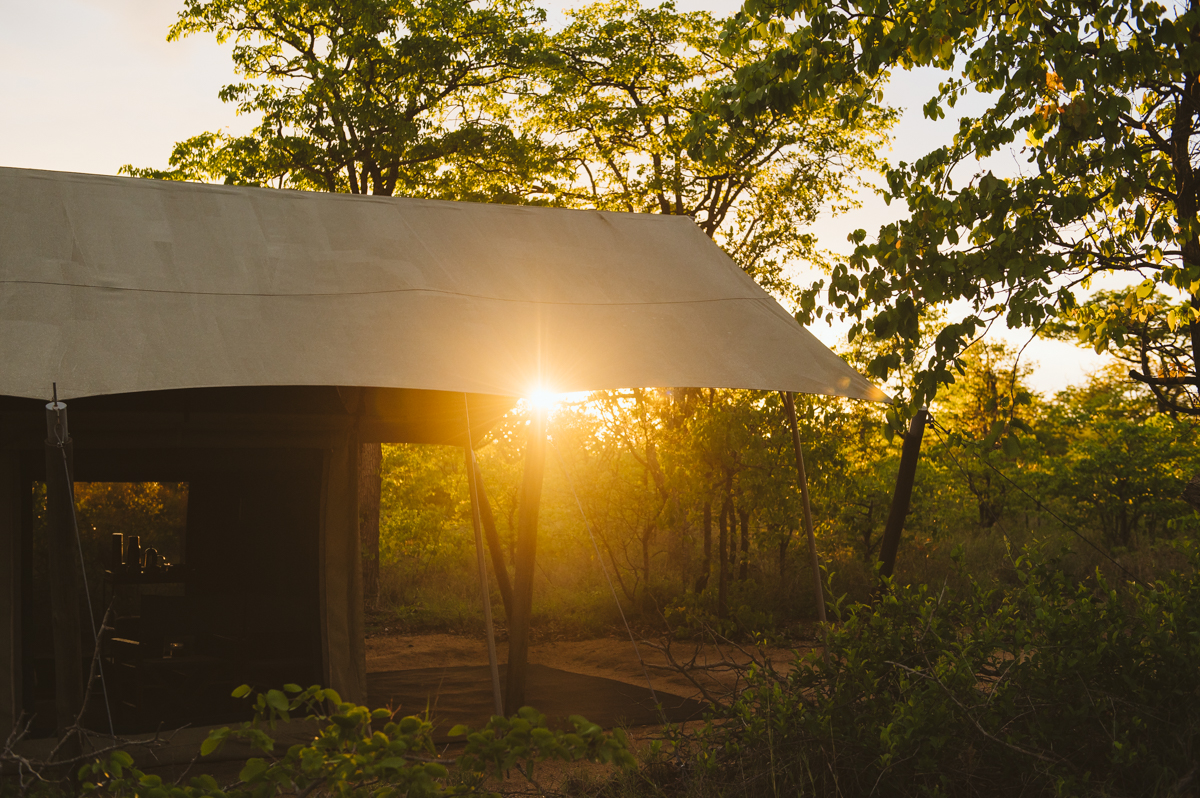
The tented accommodation sits inside the tree line, not above it. Canvas walls mean you hear everything — and in the Kruger, that is the point. The buffalo that grazed past at 2am. The hyena that laughed somewhere close and then moved on. You are not watching the bush from a distance. You are sleeping inside it.
The rhythm of days
A day in the Kruger follows the light. The first drive leaves before dawn — 5am, sometimes earlier — to be in position when the animals are most active in the cool. Back by 9 or 10, breakfast, rest through the heat of the middle hours. Then out again in the late afternoon when everything starts to move again, into the evening, into the dark.
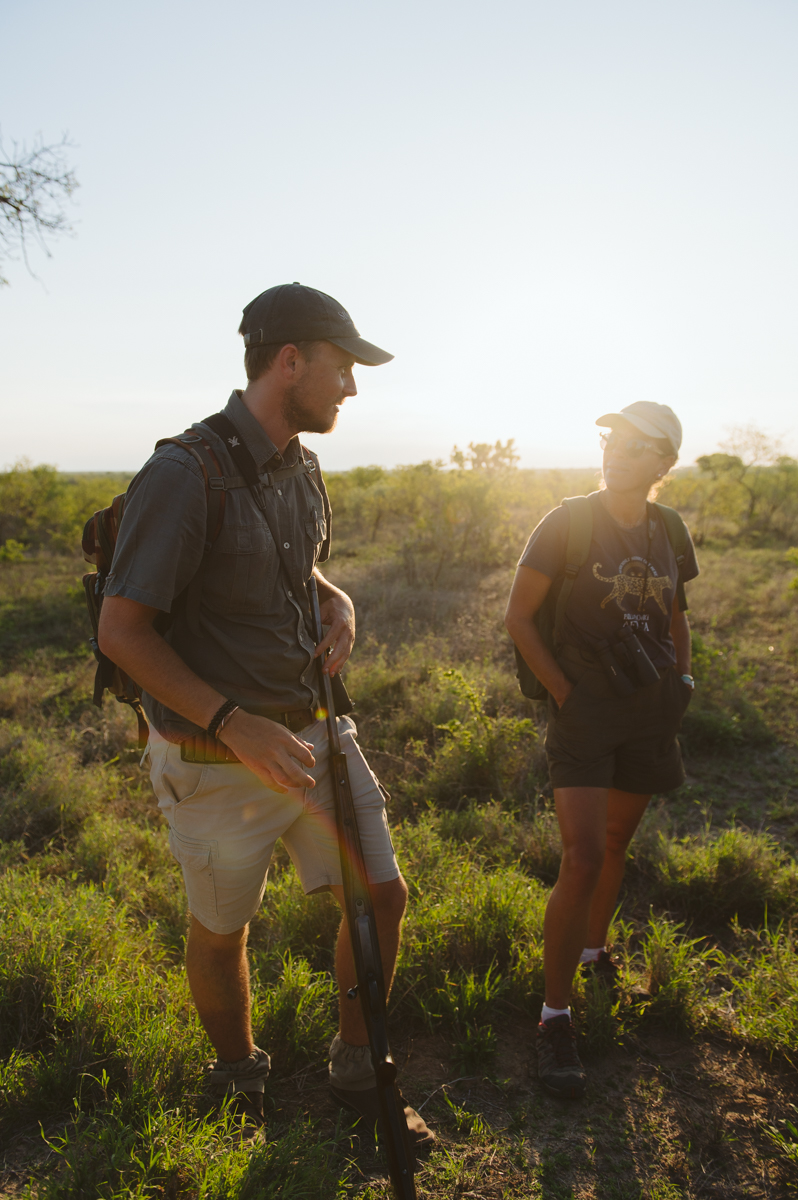
Between the drives, there is the walking safari. On foot, at ankle height to the grass, the bush becomes a different proposition entirely. Your tracker reads the ground as you walk — dung, tracks, disturbed soil — and the animal encounters that result feel less like viewing and more like inhabiting the same space. It is the experience that most changes how you think about the Kruger when you leave.
When the light goes
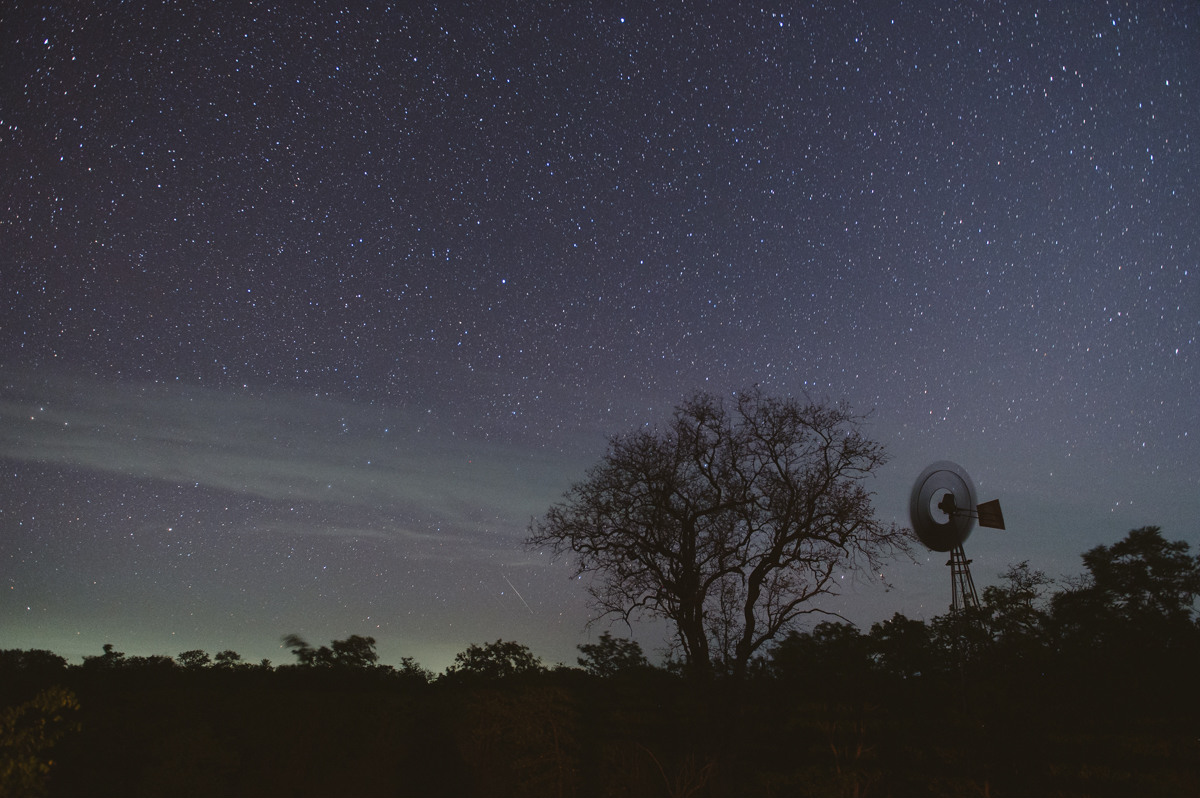
There is no light pollution in the private concessions. None. The Milky Way appears overhead as a solid band, and on a clear December night — which most of them are — the sky does something that is genuinely hard to describe to someone who has only ever seen it filtered through city air. You sit outside after dinner, and the darkness that seemed daunting when you arrived becomes the thing you most want to hold onto when you leave.
Ending the year here, in a landscape that operates entirely on its own schedule, is a particular kind of reset. The Kruger at year’s end does not care about calendars. The bush turns over in its own time, and spending a few days inside that rhythm is a reminder of how many other rhythms are possible.