In 1688, a group of French Protestant refugees — the Huguenots, fleeing religious persecution following the revocation of the Edict of Nantes — arrived at the Cape Colony and were granted land in a valley the Dutch settlers would name Franschhoek: “French Corner.” They brought with them vines, the knowledge of how to cultivate them, and a culture of the table that would leave a mark on this corner of Africa that has never quite faded.
More than three centuries later, that inheritance is still legible in the landscape, in the names of the estates, in the food on the plates, and in the wines in the glass. The French heritage of the Cape Winelands is not a museum exhibit — it is alive, producing, and worth coming specifically to understand.
The Huguenots and the valley they made
The Huguenots who arrived at the Cape were not farmers in the grand tradition — they were craftspeople, merchants, and skilled tradespeople who happened to know wine. What they found at Franschhoek was a valley of extraordinary fertility: sheltered by mountains on three sides, watered by mountain streams, with soils that would prove, over time, to be among the most expressive for viticulture in the southern hemisphere.
The Dutch East India Company that governed the Cape was not sentimental about French culture — it actively discouraged the Huguenots from maintaining their language and customs. Within two generations, French as a spoken language had largely disappeared from the valley. But the names remained: du Plessis, du Toit, de Villiers, Joubert, Rousseau, Malherbe. Walk through a Winelands wine list today and you are reading a register of Huguenot families who never entirely left.
Constantia: the oldest wines in the Cape
Before Franschhoek and Stellenbosch became the names most associated with Cape wine, there was Constantia. The estate established by Simon van der Stel in 1685 — three years before the Huguenots arrived — produced a sweet wine called Vin de Constance that became one of the most celebrated wines in eighteenth-century Europe. Napoleon ordered it shipped to Saint Helena. Jane Austen mentioned it. Frederick the Great of Prussia kept a cellar of it.
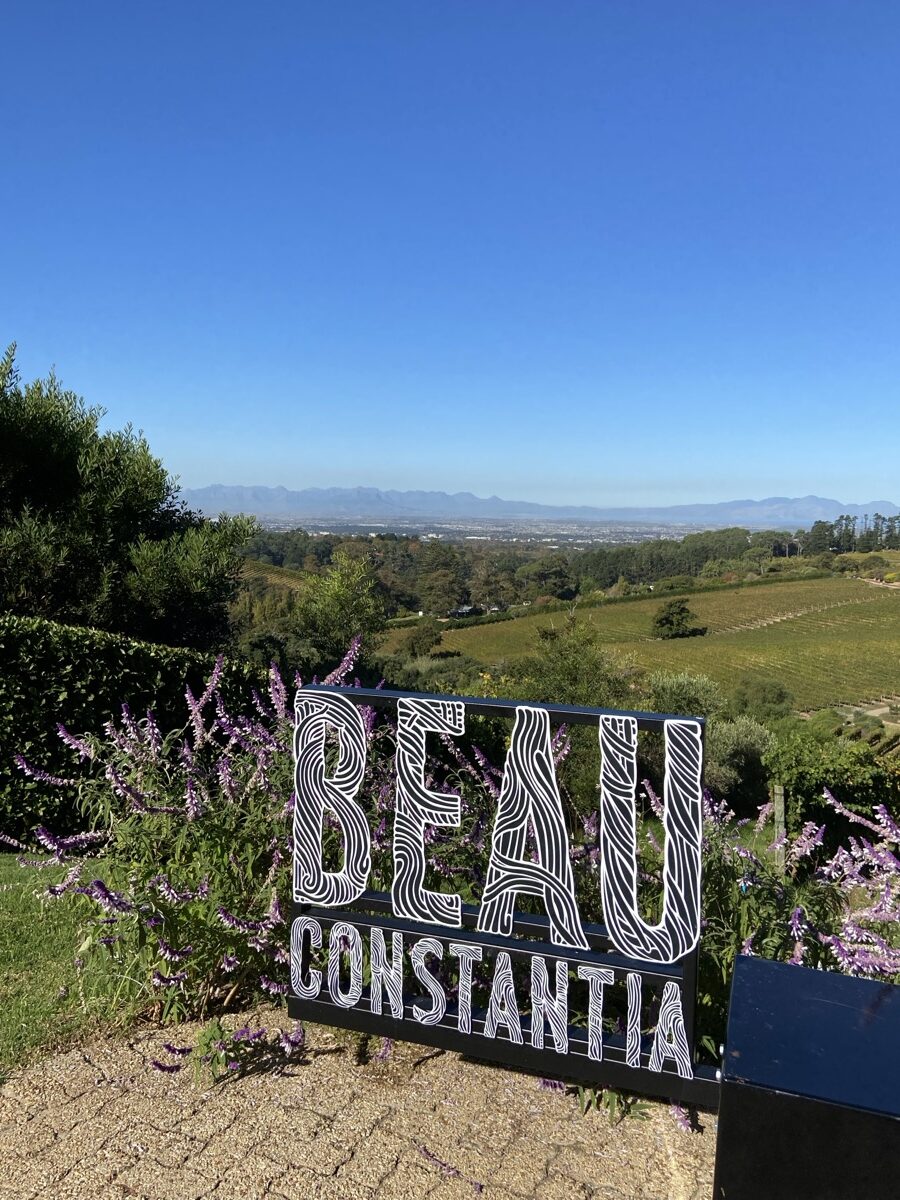
Constantia today is a residential suburb of Cape Town — a remarkable thing in itself — where several wine estates continue to operate within twenty minutes of the city centre. The valley sits beneath the eastern slopes of the Constantiaberg, sheltered and cool, with a microclimate that produces wines of genuine elegance. Klein Constantia, Groot Constantia, Beau Constantia and Steenberg are the names to know.
The culture of the table
The French Huguenots did not just bring viticulture. They brought a way of eating that placed food and wine at the centre of social life — a cultural instinct that merged with Dutch cooking traditions and, over centuries, produced something distinctly South African but recognisably shaped by its French origins.
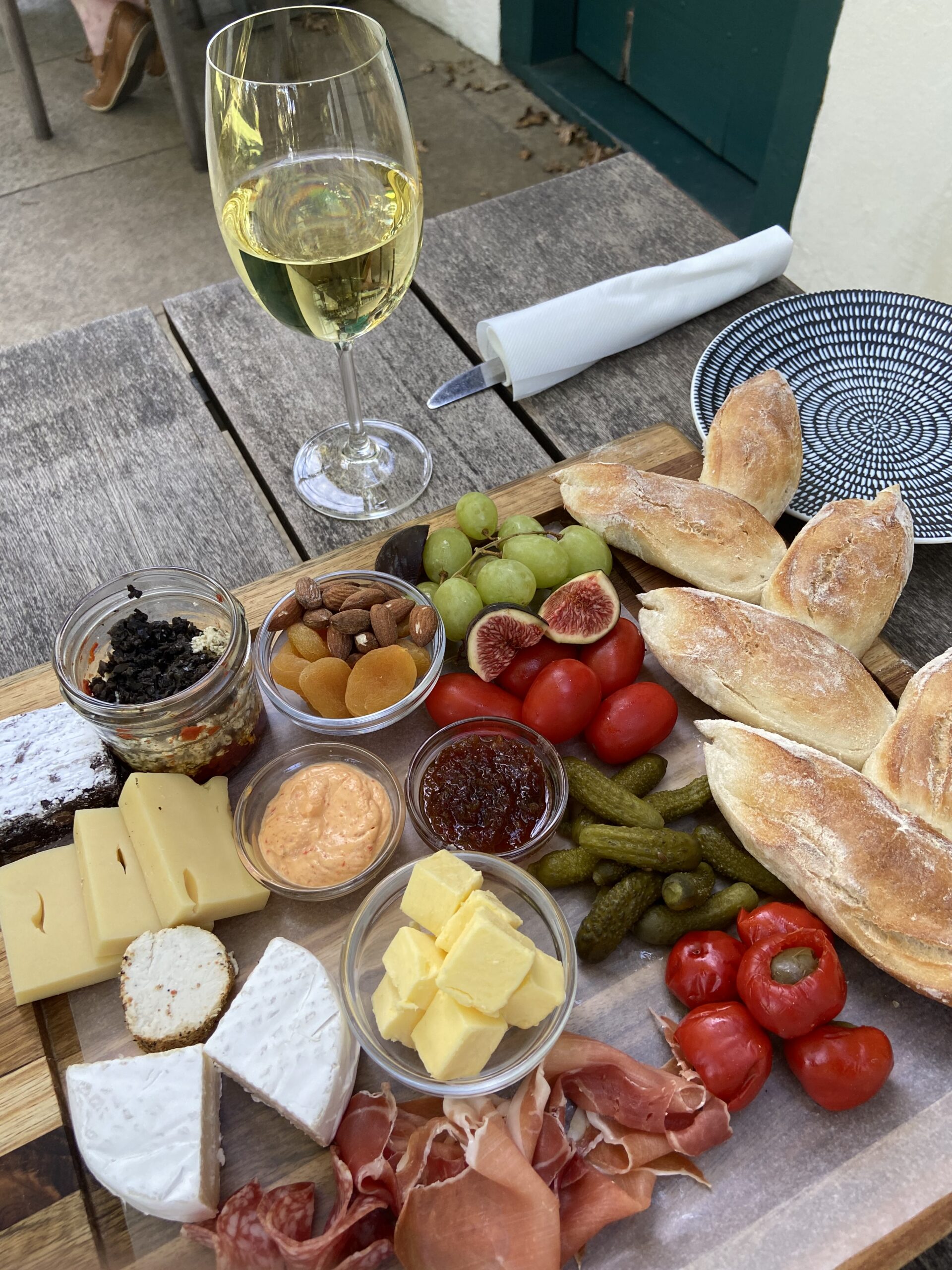
Eating at a Cape Winelands estate today is not a casual experience. The best restaurants in Franschhoek and Stellenbosch are among the finest on the continent — using produce grown on the estate or sourced from neighbours within a few kilometres, cooking it with the precision that comes from taking food seriously, and pairing it with wines made from vines that have been in the ground for decades. The cheese boards, the terrines, the slow-braised dishes: French inflections, expressed in South African ingredients.
The farms and what they look like
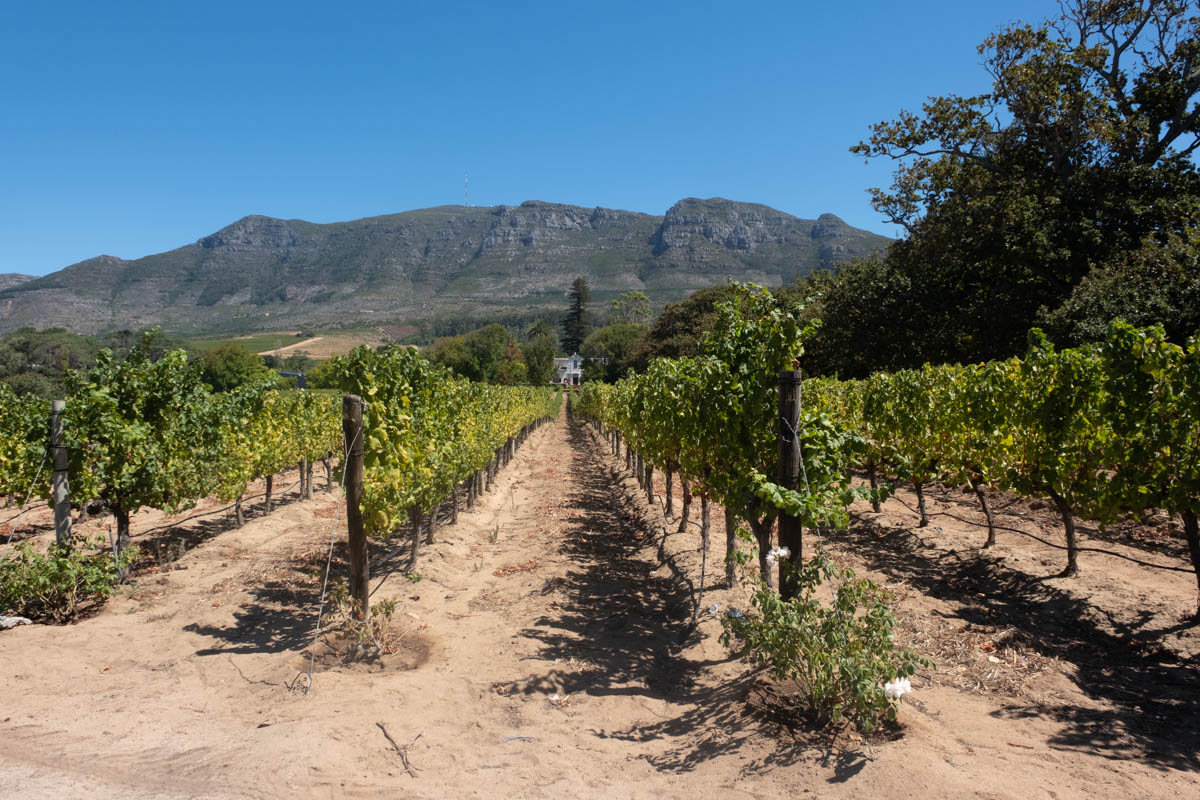
The physical landscape of the Cape Winelands carries its own history. The Cape Dutch architecture — the whitewashed gables, the thick-walled homesteads, the oak-lined avenues — is the style developed by Dutch and German settlers in the seventeenth and eighteenth centuries, but it frames a viticultural enterprise that the French shaped. These two inheritances sit in the same valleys, on the same farms, producing an aesthetic that is unlike anywhere else in the wine world.
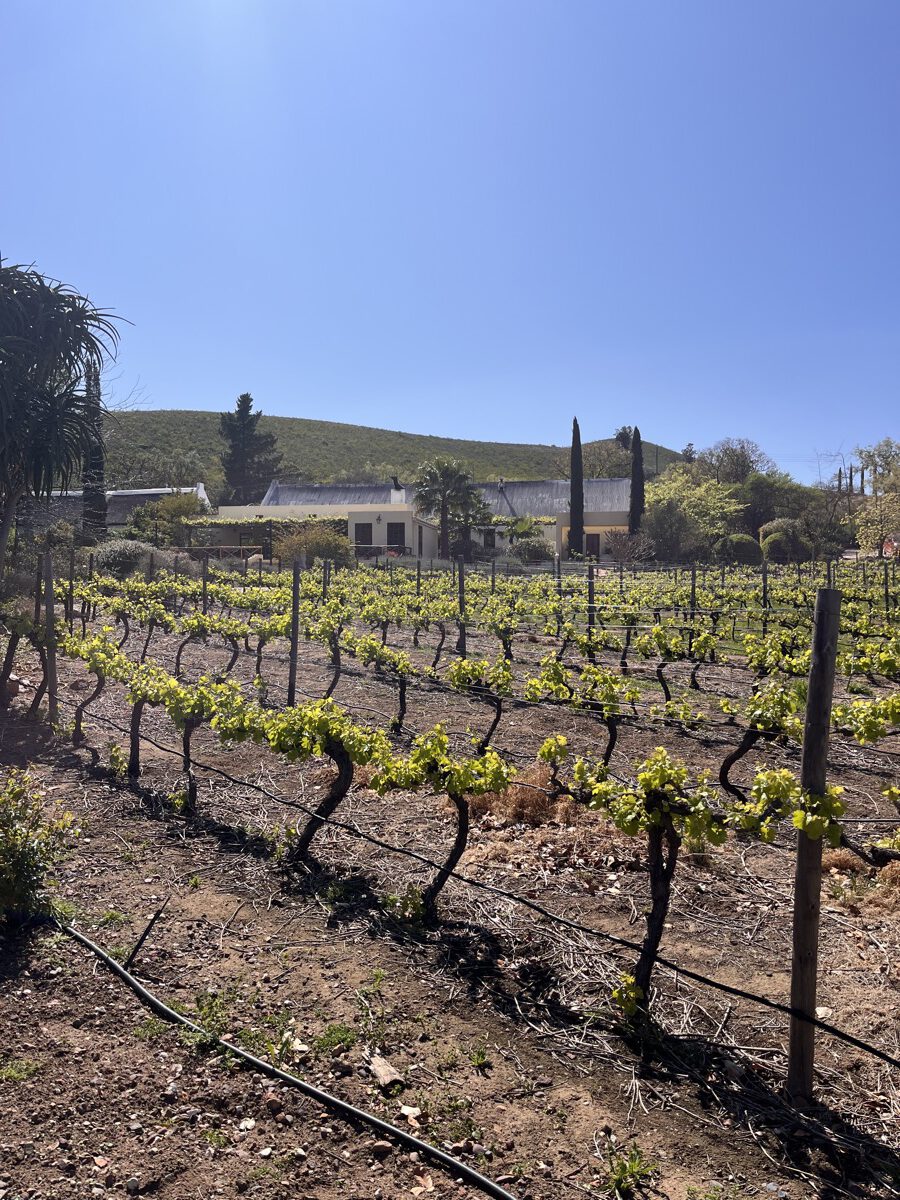
Walking through a working estate in early spring, when the new growth is just appearing on the old vines and the mountains behind are still carrying their winter green, is one of the quieter pleasures the Winelands offer. The farms are not theme parks. They are working agricultural properties that happen to be beautiful, and the best ones know the difference.
Franschhoek: the village at the centre of it all
Franschhoek is the most concentrated expression of French heritage in South Africa. A single main street — the Huguenot Road — runs through a village that has built its identity entirely around its origins: the Huguenot Monument at the top of the valley, the French-named restaurants, the wine estates that carry family names unchanged since the seventeenth century.
It is also, fairly, one of the best places to eat in South Africa. The concentration of serious restaurants in such a small town is improbable — The Tasting Room, Babel, La Petite Colombe, Epice — and while not every meal lives up to the ambition, the standard is consistently high enough that Franschhoek has a legitimate claim to being the culinary capital of the country.
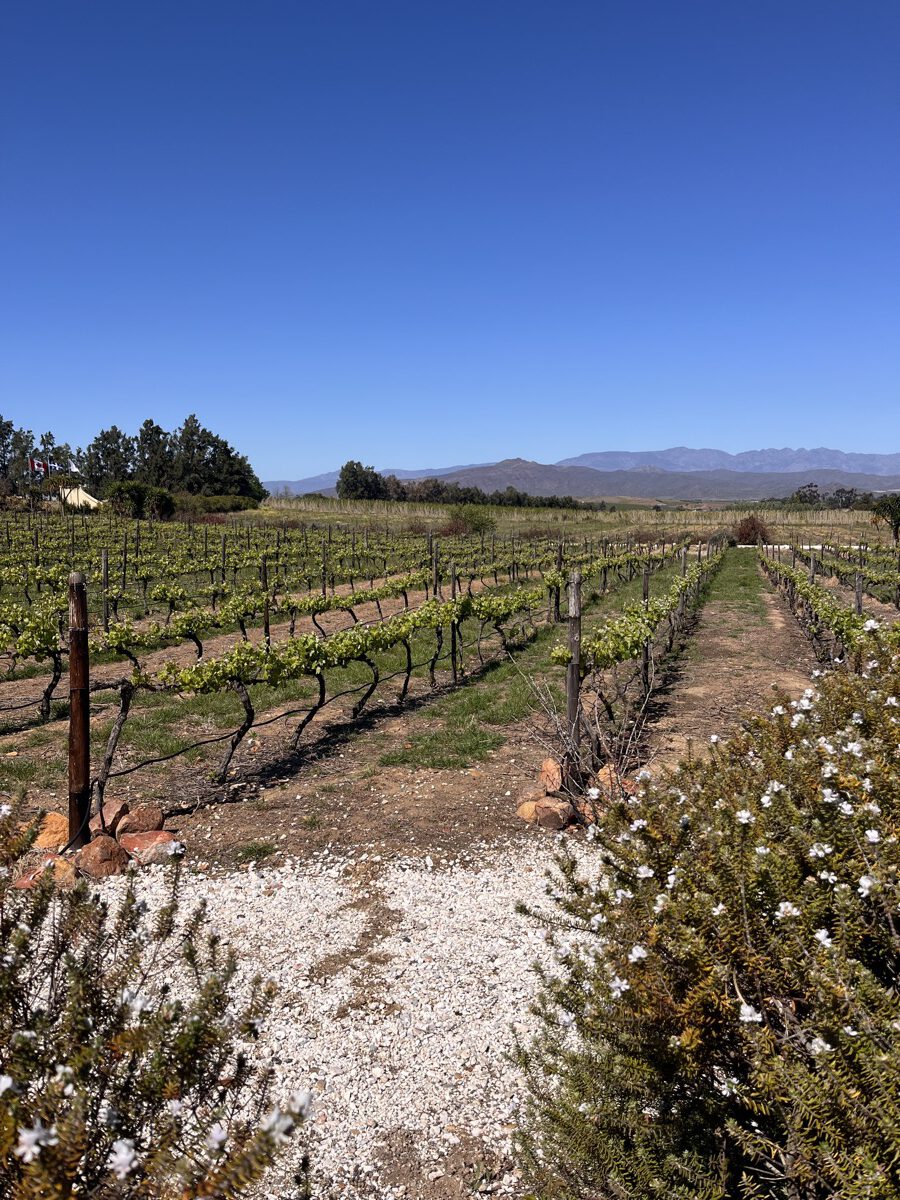
But Franschhoek rewards those who look past the restaurants too. The valley itself — surrounded on three sides by dramatic mountain passes — is strikingly beautiful. The estates spread out from the village along roads that wind between vineyards and farms, and driving or cycling between them on a clear autumn morning, when the leaves are turning and the harvest is recent, is one of those South African experiences that is hard to improve on.
Why it matters as a travel destination
The French heritage of the Cape Winelands is not simply a historical curiosity. It is the reason the wines are what they are, the reason the food culture developed as it did, and the reason this corner of Africa produces experiences that feel, in a particular and hard-to-define way, both deeply South African and connected to something much older and further away.
For French travellers especially, there is something quietly startling about arriving in Franschhoek — finding surnames you recognise, a language that echoes, a relationship with wine and food that feels familiar despite being expressed in an entirely different landscape. It is one of those places that rewards knowing the story before you arrive, and that gives the story back to you, richer, when you leave.